

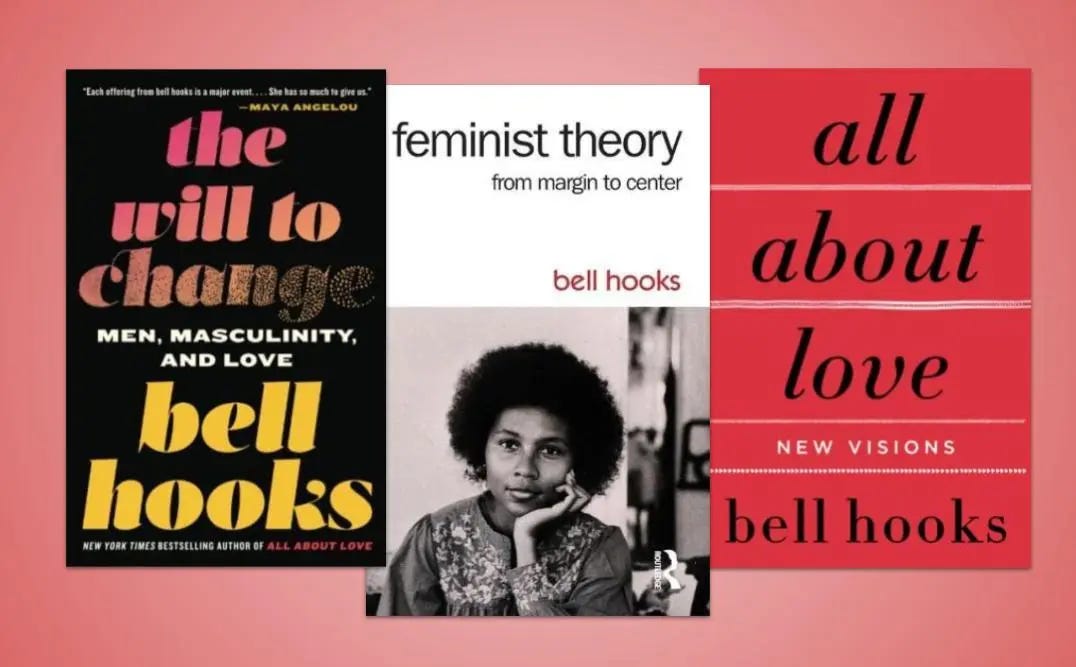
In the early 2000s, I interviewed bell hooks, the leading Black feminist scholar who helped popularize the concept of intersectionality,1 writing about class, gender, race, and womanhood. She was incredibly approachable when I introduced myself—a 'super green' intern—at a reading for her book All About Love, the first in a series of three books on the transformative power of love for community. She argues that our culture puts romance on a pedestal, but has lost the plot. Gone is compassion, redemption, and a sense of of sacredness.
The reading was at Forty-Second Street library, and I was humming with excitement that a feminist icon had filled a room with people here to listen to her talk about romantic love, a rare focus for a university academic. Notebook in hand, I asked her if she’d give me an interview without even securing an assignment (I eventually used the interview a decade later in a HuffPost story). But hooks was kind enough to talk to me on the phone on what must’ve been one of my first recorded interviews. Ahead, from my archives, some of my favorite quotes from that interview.
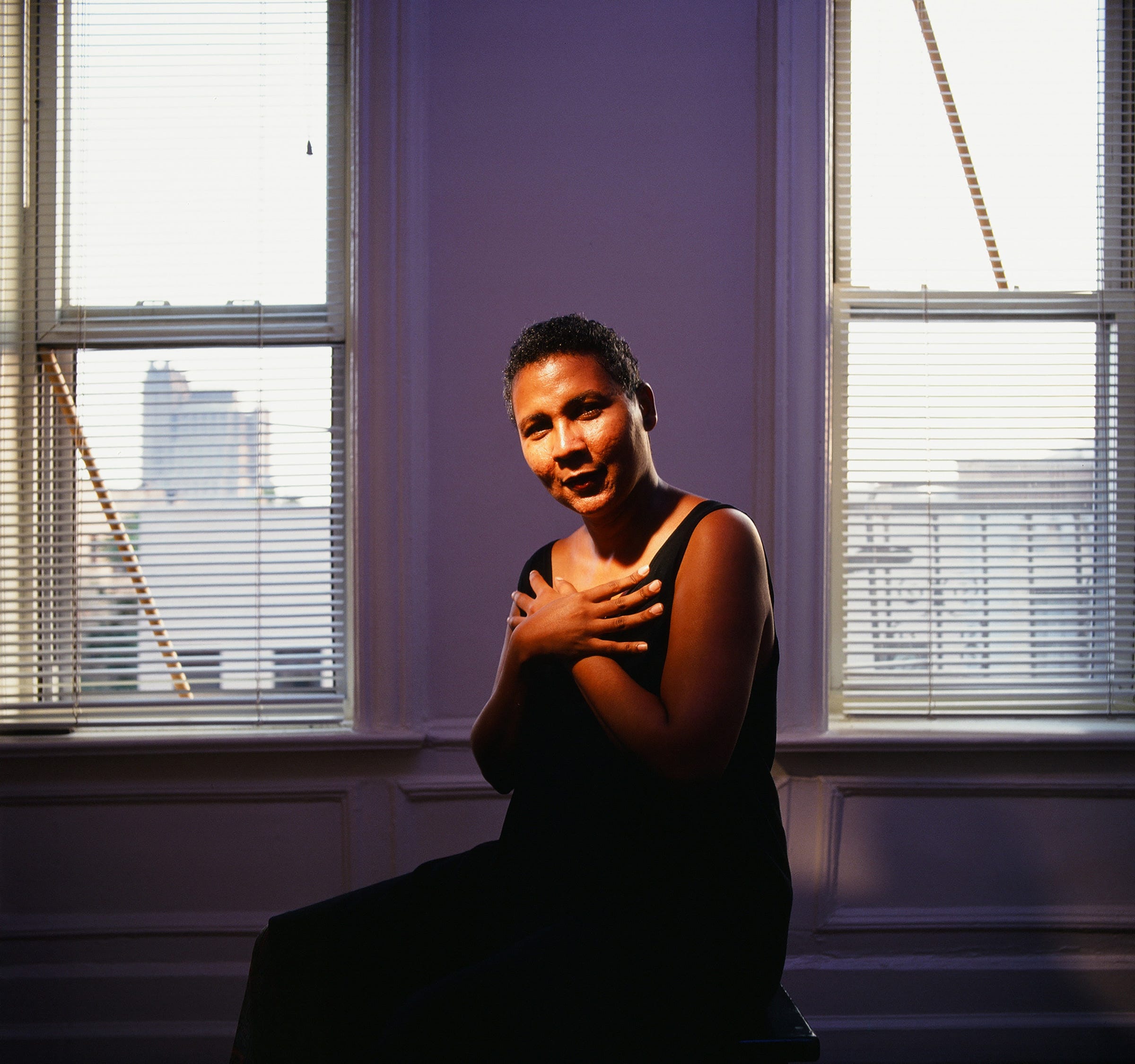
bell hooks on love as a choice: “A lot of feminism’s concerns have to do with choice. Whether we’re talking about reproductive rights or love, part of our whole struggle has been to create a space where people can choose. We have to think of love as a choice.”
bell hooks’ formula for love: “I like to follow a definition of love that combines care, commitment, knowledge, respect, responsibility, trust.”
bell hooks on why women love the unavailable man: “Most men can con women into believing that they are open to change when in essence they’re not. If someone acts like he is willing to change as a result of your nurturing, well who wouldn’t be enthusiastic about that? The traditional ways we talk about love are very blame-centered. Unfortunately, people seek to blame women rather than target patriarchal culture that keeps men from emotional growth.”

bell hooks on what women in their 20s and 30s can learn from older women: “I am concerned about women in their late 20s and 30s because they are so incredible and smart and free. At the same time, they’re frightened that these qualities will cause them to be alone. They become afraid to truly develop their full identities. Middle age women have wisdom to share with younger women who needn’t go through heartache.”
bell hooks on women standing up to the fear of being unlovable: “Females don’t need to torture themselves by the fear that if they develop their full potential they will be outside love.”
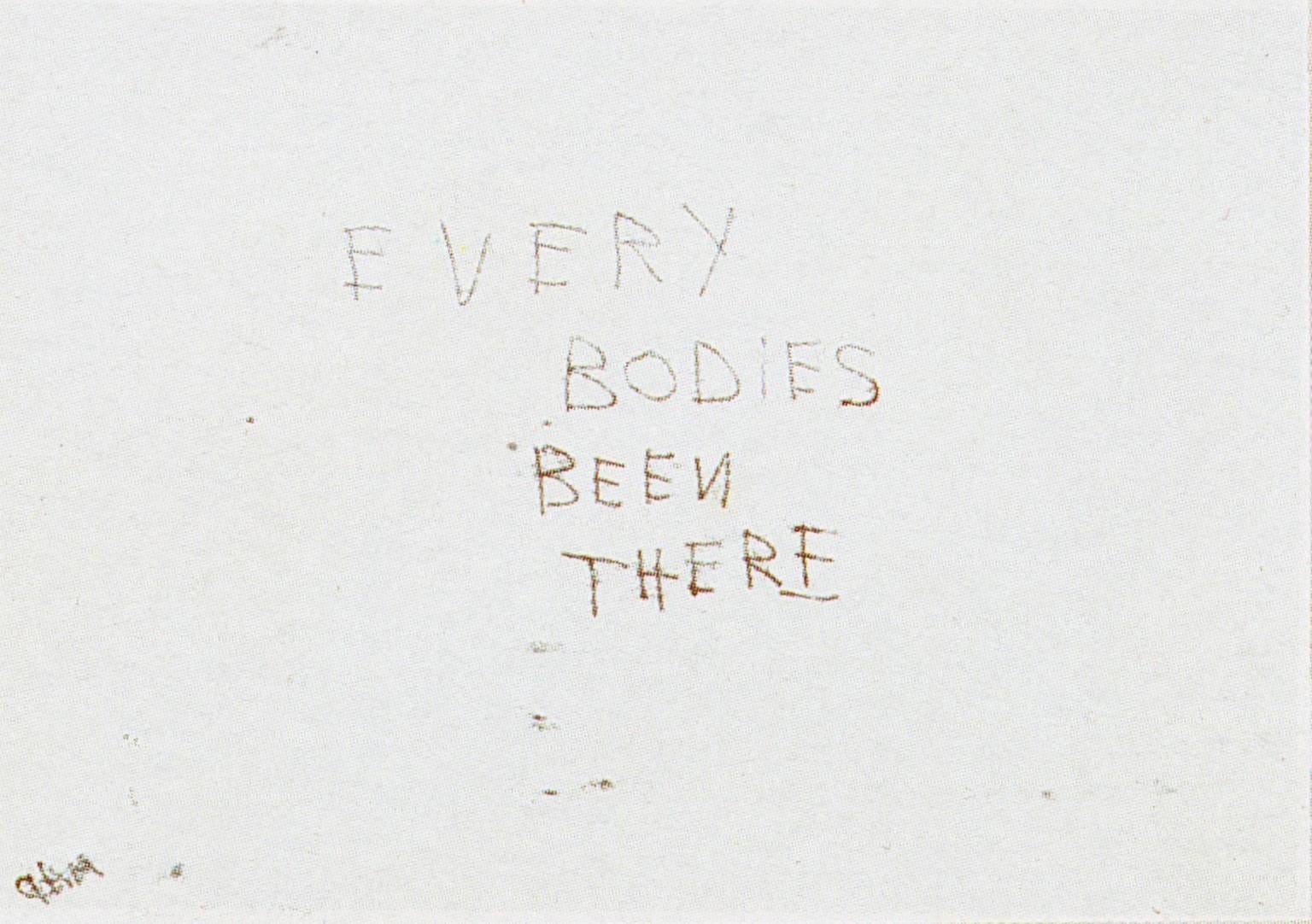
bell hooks on monogamy and love: “I don’t know many people in real life who think of monogamy and love on the same page. Often one talks about monogamy in relation to sex and desire. Whether monogamy is there organically or not—if you learn how to love, you know the limits of trying to love a whole bunch of people. We need more time for love. That’s out of the question when you’re dealing with lots of people.”

bell hooks advises men on how to love: “As a man, you have a choice. Most men have difficulty even talking about love. They are not making choices, but rather moving in the direction patriarchy steers them.”
bell hooks on how to find the ultimate love: “Ask yourself: are you showing yourself care, commitment, knowledge, respect, responsibility, and trust? What do these qualities mean in your life? Then you can look for them in someone else. It’s helpful for people to know what they want.”
Revisiting this interview I’m struck by how much resonance these quotes have two decades later. Our culture manufactures, consumes, rejects, negotiates, and longs for romantic love. It’s not just enough to feel it, and I think hooks would agree, but to feed it. Because without that care, it has no chance for survival. I’m trying to show up more—first for myself, as myself, and then for my community to find the sacredness in the everyday. That is love, isn’t it?
Thanks for reading FWIW By Jill Di Donato ! This post is public so feel free to share it.
**Kimberlé Crenshaw shaped our modern understanding of intersectionality: as a “prism” for understanding how various systems of inequality entwine to exacerbate one another.